

Graded Graphene Oxide for Battery Materials
Aqueous drop-in graphene additive for advanced lithium-ion batteries.
Improves silicon anode stability, efficiency, and cycle life with easy integration into existing battery production.
Sustainable Graphene Oxide Additive for High-Performance Silicon Anodes
Graded Graphene Oxide (GGO) is an aqueous drop-in graphene additive designed to improve the performance, stability, and processability of advanced battery materials, especially silicon-based anodes for lithium-ion batteries. The additive can be added directly to existing manufacturing processes and disperses easily in electrode slurry preparation.
However, silicon anodes can expand strongly during charge and discharge cycles, causing cracking, delamination, and reduced battery lifetime. Danish Graphene’s drop-in Battery additive is designed to address these challenges by improving dispersion stability, electrode integrity, and long-term cycling performance.
The additive can be integrated directly into existing electrode slurry preparation processes without additional stabilizers or major reformulation. It disperses uniformly, maintains a high concentration of active material, and helps prevent agglomeration during electrode casting. In evaluations with five different silicon anode manufacturers, the product showed positive effects on silicon anode performance. Compared with conventional carbon nanotube additives, it offers easier handling, improved processing, and strong performance in demanding silicon anode systems.
The product is manufactured using a renewable electrochemical production method mainly relying on water and sustainable energy, supporting more sustainable battery material development.
NAGASE supplies Graded Graphene Oxide in partnership with Danish Graphene for advanced lithium-ion battery manufacturing – with technical support, application know-how, and international logistics capabilities for customers in the global battery industry.
Applications
Graphene Additive for Silicon Anodes is used to enhance battery performance, electrode stability, and processability in advanced lithium-ion battery production.
- Silicon anode materials for high-energy lithium-ion batteries
- Electric vehicle batteries requiring improved cycle life and efficiency
- Energy storage systems with demanding durability requirements
- Electrode slurry preparation for stable and uniform dispersion
- Next-generation battery materials replacing or complementing CNT additives
Features
Graded Graphene Oxide provides easy drop-in integration, stable dispersion, and improved electrochemical performance in advanced battery materials.
- Aqueous drop-in solution – Added directly to existing battery manufacturing processes
- High dispersion stability – Helps prevent agglomeration during electrode casting
- Improved efficiency – Increases initial coulombic efficiency by up to 20%
- Longer cycle life – Extends battery lifetime by up to 35%
- Sustainable quality – Produced electrochemically and validated by advanced characterization
Electrode Slurry Viscosity and Electrode Resistivity
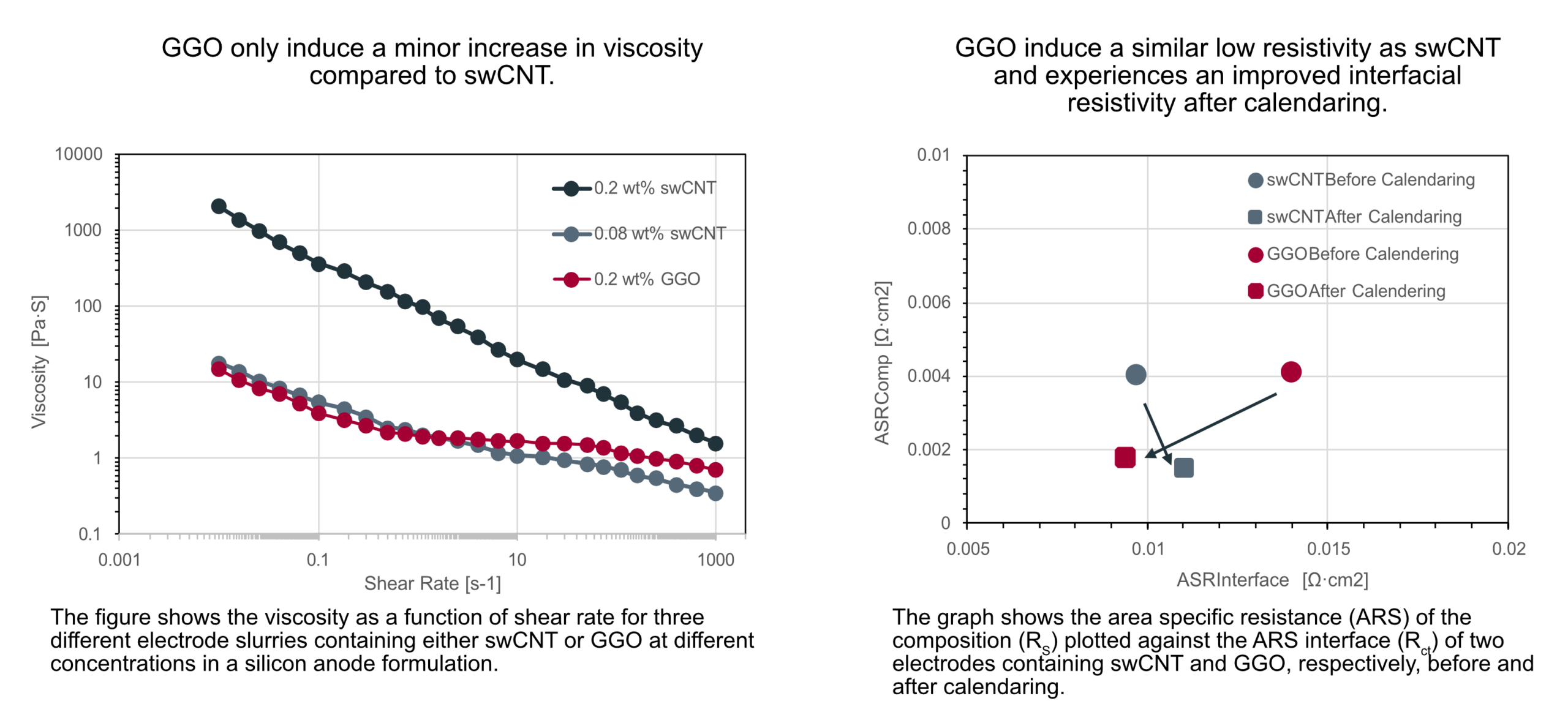
High Loading Silicon Anode Electrodes – Half Cells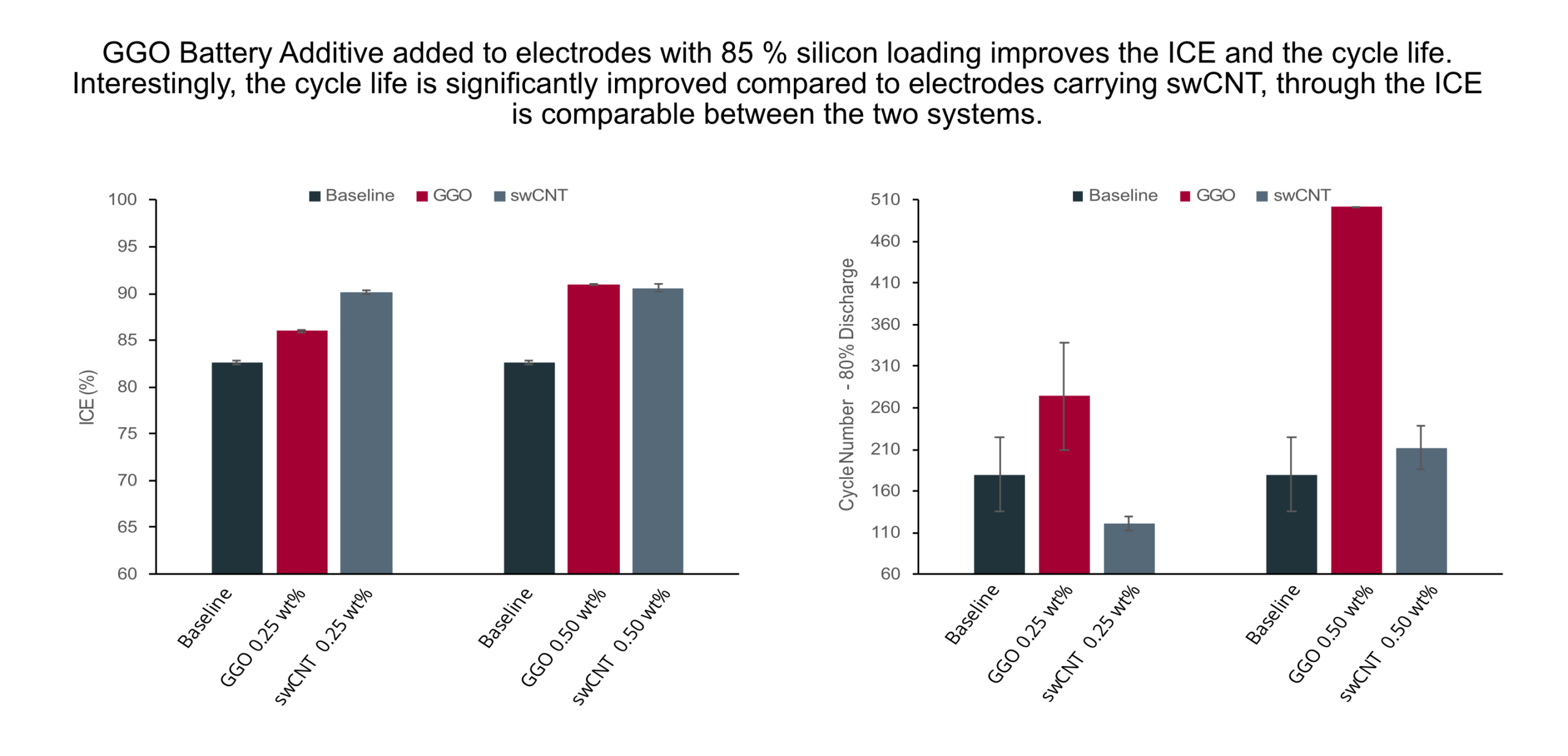
High Loading Silicon Anode Electrodes – Full Cells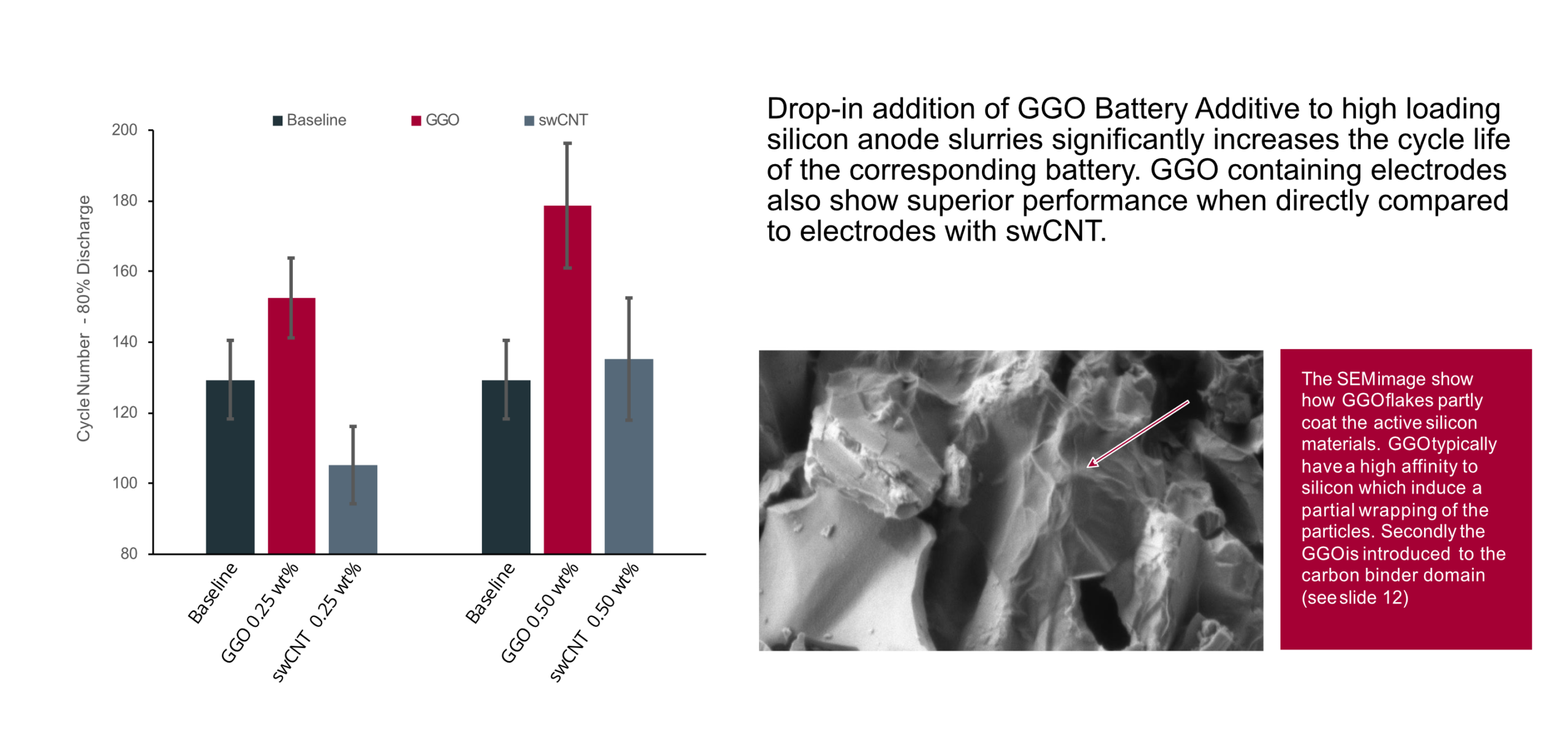
Thermal Stability at High Drying Temperatures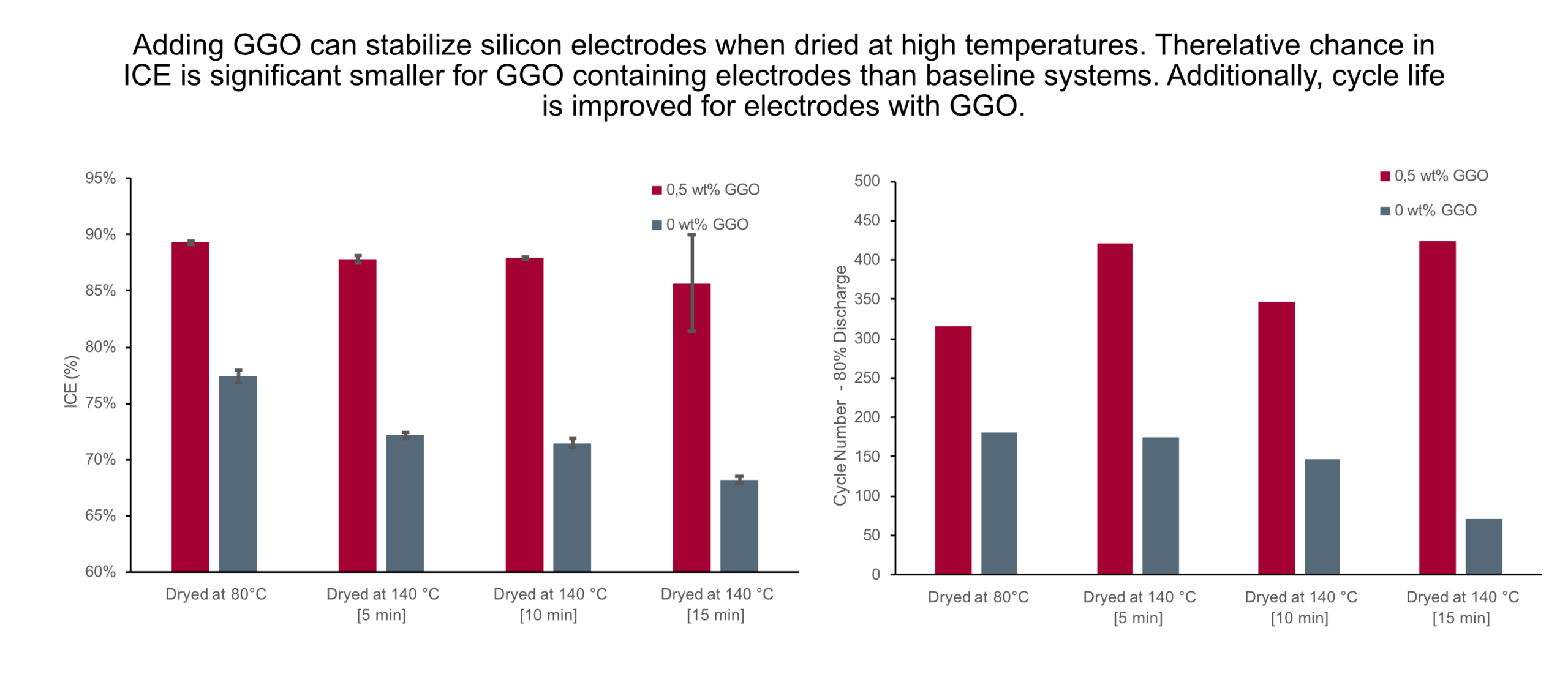
Silicon/Graphite Anode Electrodes
Graphene for Cathode Materials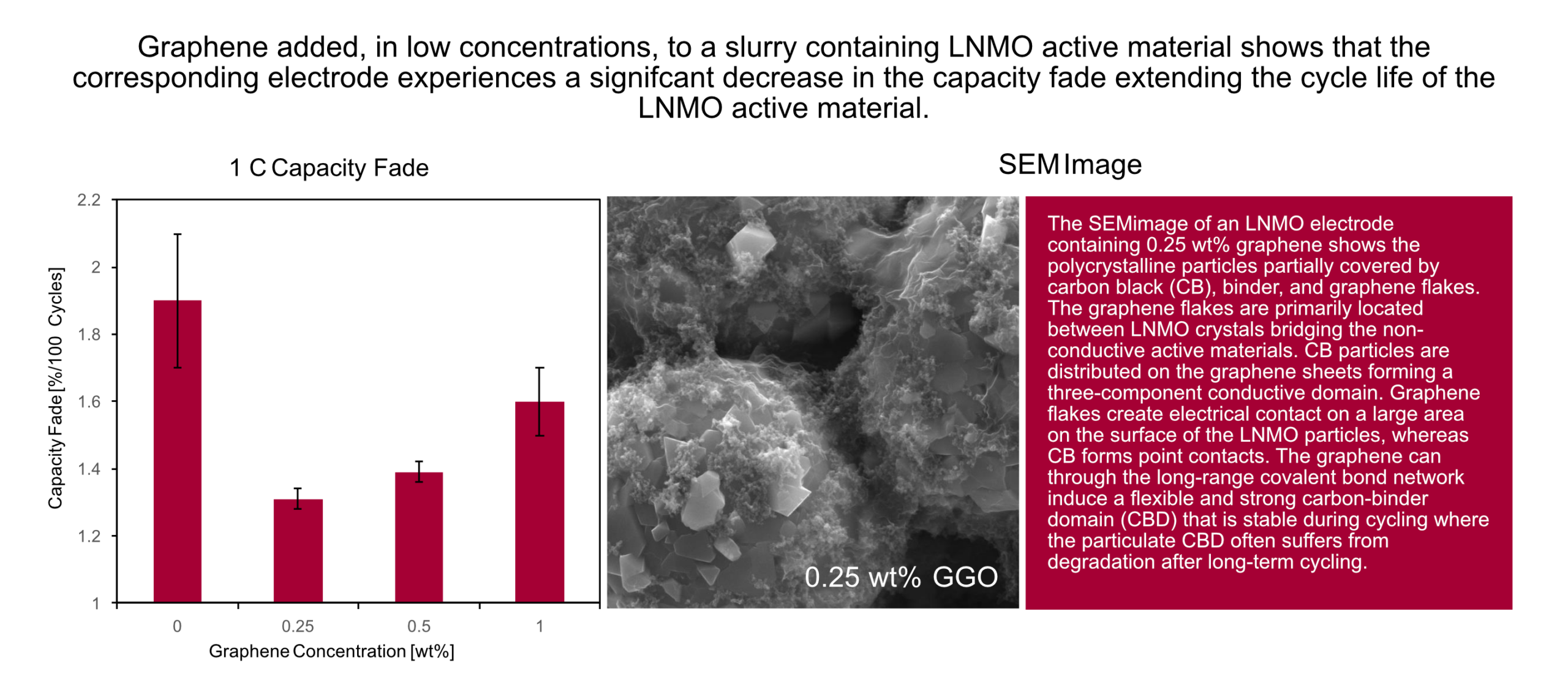
SEM Images of LNMO Polycrystals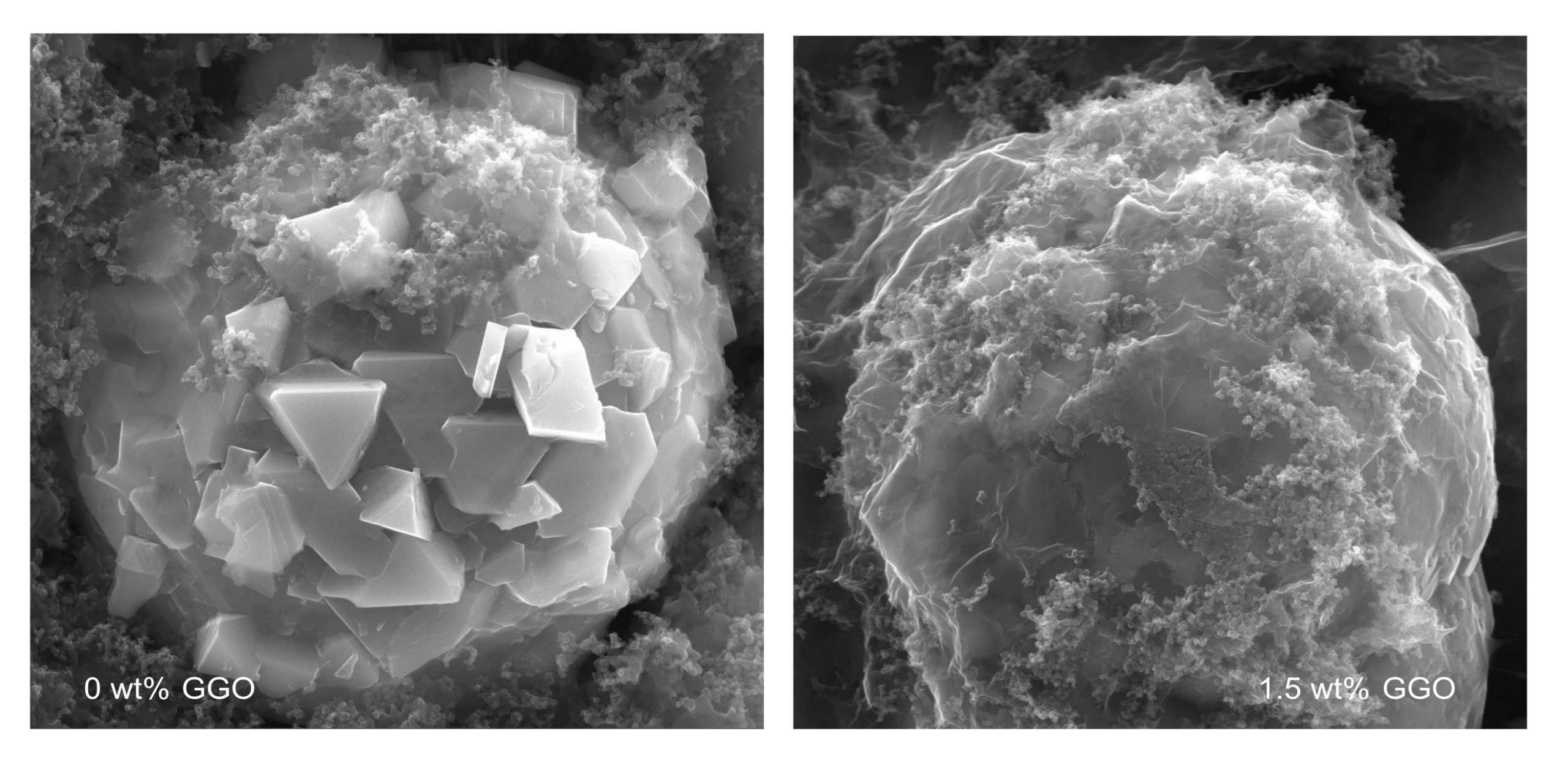
Source: All data Danish Graphene
Frequently Asked Questions about Graphene Additive for Silicon Anodes
What is Graphene Additive for Silicon Anodes used for?
Graphene Additive for Silicon Anodes is used to improve the performance, stability, and cycle life of silicon-based anodes in lithium-ion batteries.
Why are silicon anodes important for next-generation batteries?
Silicon anodes offer much higher capacity than conventional graphite anodes, making them attractive for high-energy applications such as electric vehicles and energy storage systems.
What problem does the graphene additive solve in silicon anodes?
Silicon can expand significantly during charge and discharge cycles, which may cause cracking, delamination, and loss of electrode stability. The graphene additive helps improve structural integrity and cycling performance.
How is the graphene additive integrated into battery production?The additive is designed as a drop-in solution and can be added directly during electrode slurry preparation without major process changes or additional stabilizers.
How does the graphene additive compare with CNT additives?Compared with conventional CNT additives, the graphene additive offers improved dispersion stability, reduced agglomeration, easier handling, and strong performance in silicon anode systems.
What performance benefits can the graphene additive provide?
The additive can improve initial coulombic efficiency by up to 20% and extend cycle life by up to 35%, supporting longer-lasting and more efficient lithium-ion batteries.
Related Products
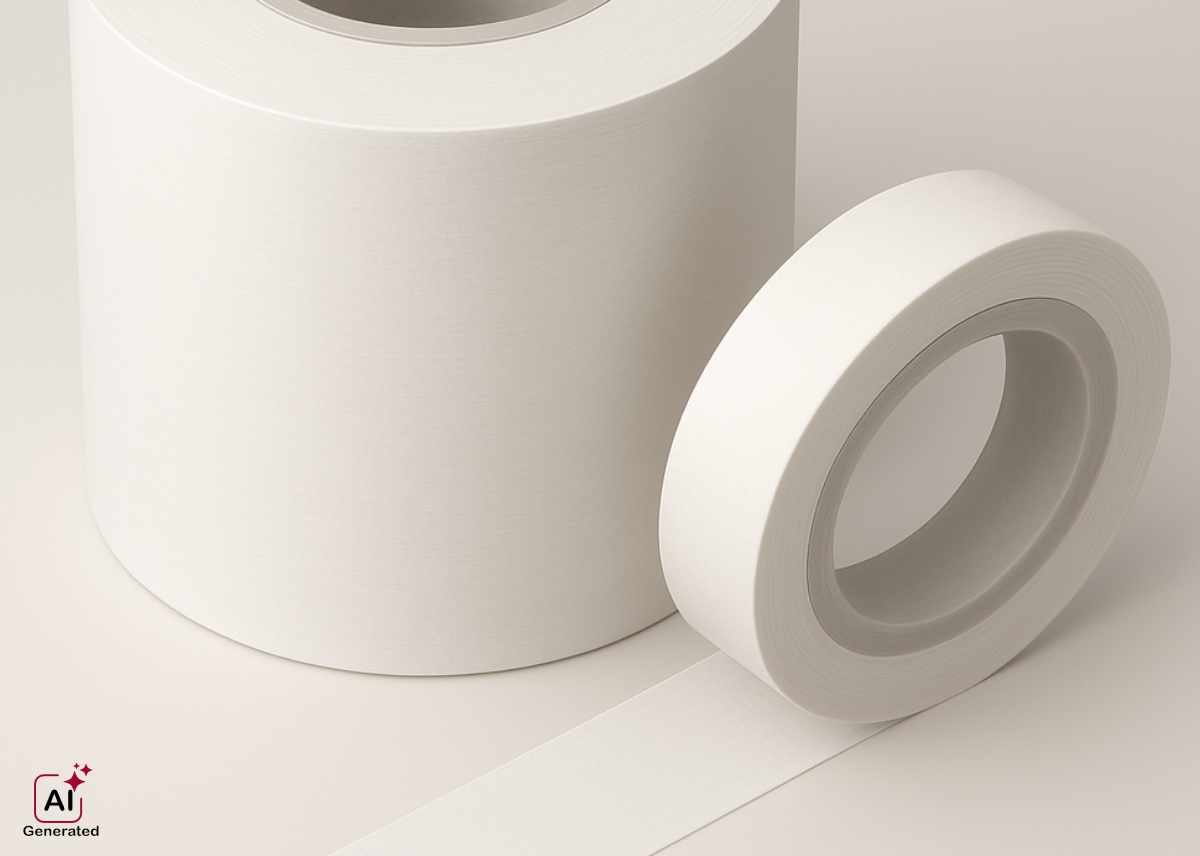
Battery Separator
Next-gen cellulose separator for lithium-ion batteries. Enables enhanced cycle life, low internal resistance, and improved safety through thermal stability.
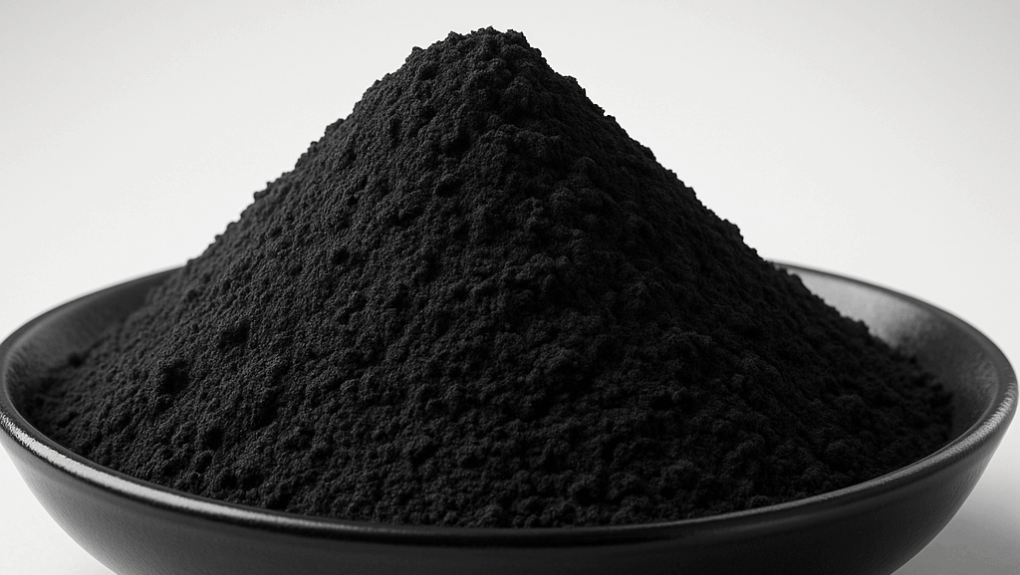
LFP Cathode Material – Lithium Iron Phosphate
Reliable LFP cathode material for lithium-ion battery production. Widely used for EVs, residential storage, and scalable grid systems. Made in India.
Electrolyte Additives for LiB and SiB
Advanced additives for enhanced battery stability and performance. Improve safety, longevity, and efficiency in lithium- and sodium-ion energy systems.
